Off-Track Door, Cable & Roller Repair in New Braunfels, TX
Doors off the track, snapped or frayed lift cables, worn rollers, and bent track. Re-seated, re-cabled, and balance-tested — without forcing a door that could drop a panel.
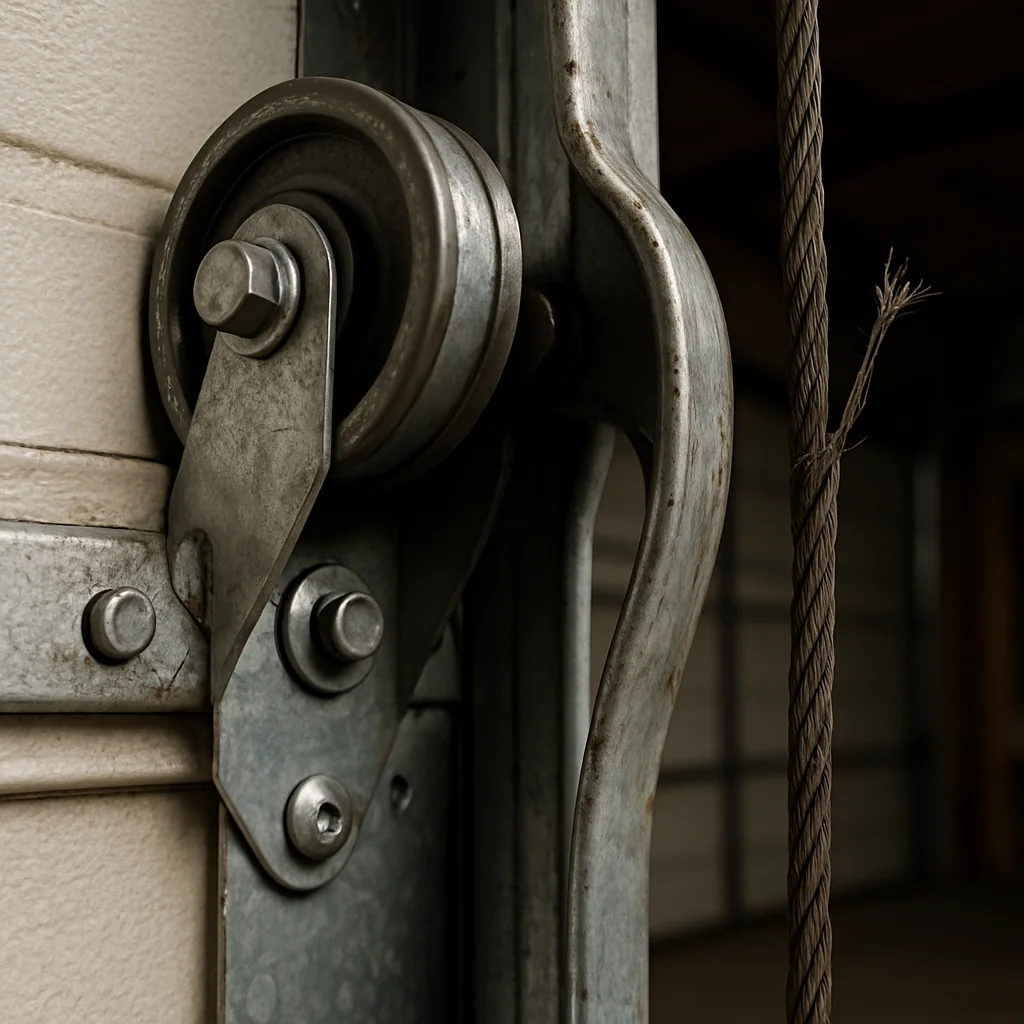
What Off-Track and Cable Repair Covers
The cables, rollers, and track are what guide a garage door up and down in a straight, controlled path. When something in that system fails, the door binds, hangs crooked, or jumps the track entirely. Lift cables run from the bottom of the door to the cable drums on the spring shaft; they fray over years of cycling and can snap, which lets one side of the door drop. Rollers ride inside the track and wear out — a roller that seizes or breaks lets the door wander out of the track. Track can bend from an impact (a bumper, a ladder) or from years of a misaligned roller, and a bent section catches the door.
A door that is off the track or has a broken cable should not be operated. Forcing it with the opener can pull more rollers out, drop a panel, or worsen the bend. The repair re-seats the door in the track, replaces the failed cables or rollers, straightens or replaces bent track, and confirms the door runs true. Cables are always replaced in pairs and matched to the door, and the drums are checked so the new cables seat correctly.
Because cable tension is tied to the springs, cable work is treated with the same caution as spring work — released and re-tensioned in the correct order so the door stays balanced.
Common New Braunfels Off-Track Scenarios
The door is crooked — one side dropped lower than the other. Usually a snapped or slipped lift cable on the low side. The door is no longer evenly supported and should be left alone until a technician re-cables and re-balances it.
The door jumped the track after a bump. A common one in busy two-car garages — a roller pops out of the track after contact with a vehicle or a stored item. The door is re-seated, the rollers and track inspected for damage, and any bent section addressed.
Grinding or squealing rollers, and the door drifts to one side. Worn nylon or steel rollers and dry bearings. Replacing the rollers and lubricating the track quiets the door and keeps it tracking straight — often bundled into a maintenance visit.
Off-Track Door, Cable & Roller Repair Near You
Off-Track Door, Cable & Roller Repair FAQ
No. A door off the track or with a broken cable is no longer evenly supported, and operating it can pull more rollers out, bend the track further, or drop a section. Leave it where it is and call — forcing it usually turns a small repair into a larger one.
Lift cables typically last 8-15 years depending on cycle count and exposure; rollers vary widely — inexpensive plastic rollers wear in a few years, while sealed nylon or steel rollers last much longer. Both are inspected during any spring or tune-up visit so worn parts are caught before they fail.
Cables fray gradually where they wind on the drum or at the bottom bracket, then fail. Causes include age and cycle count, a door that's been running out of balance (often from a tiring spring), rust, or a roller that's been binding. The drums and springs are checked at the same time so the new cables don't fail early for the same reason.
Minor bends can often be straightened on-site so the door tracks true again. A section that's badly crushed or kinked is replaced, since a compromised track will keep pulling the door out of alignment. The technician confirms the door runs smoothly through a full cycle either way.
Related Services
Off-Track Door in New Braunfels?
Don't force it — forcing an off-track door drops panels. Same-day re-seating, re-cabling, and balance testing.